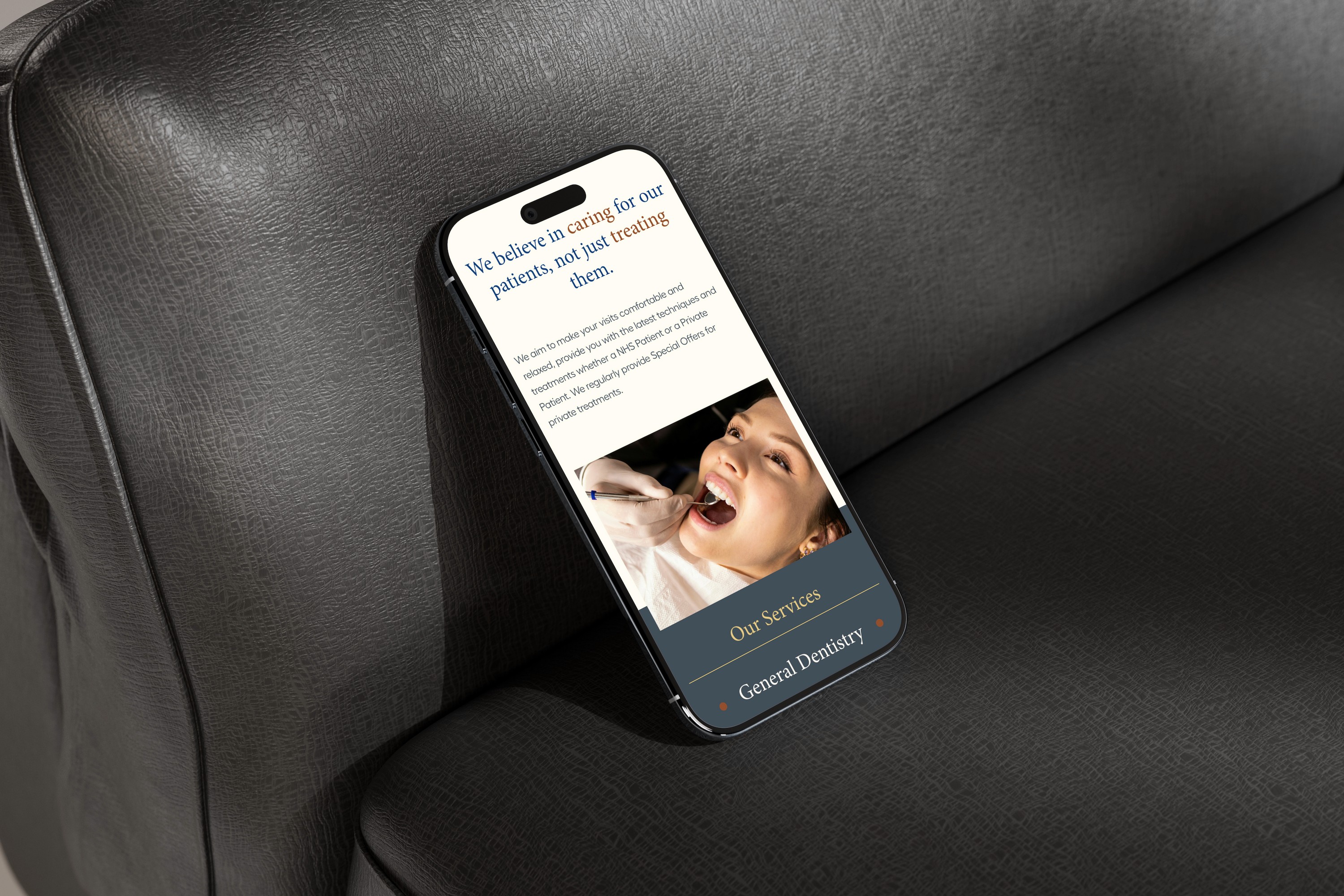
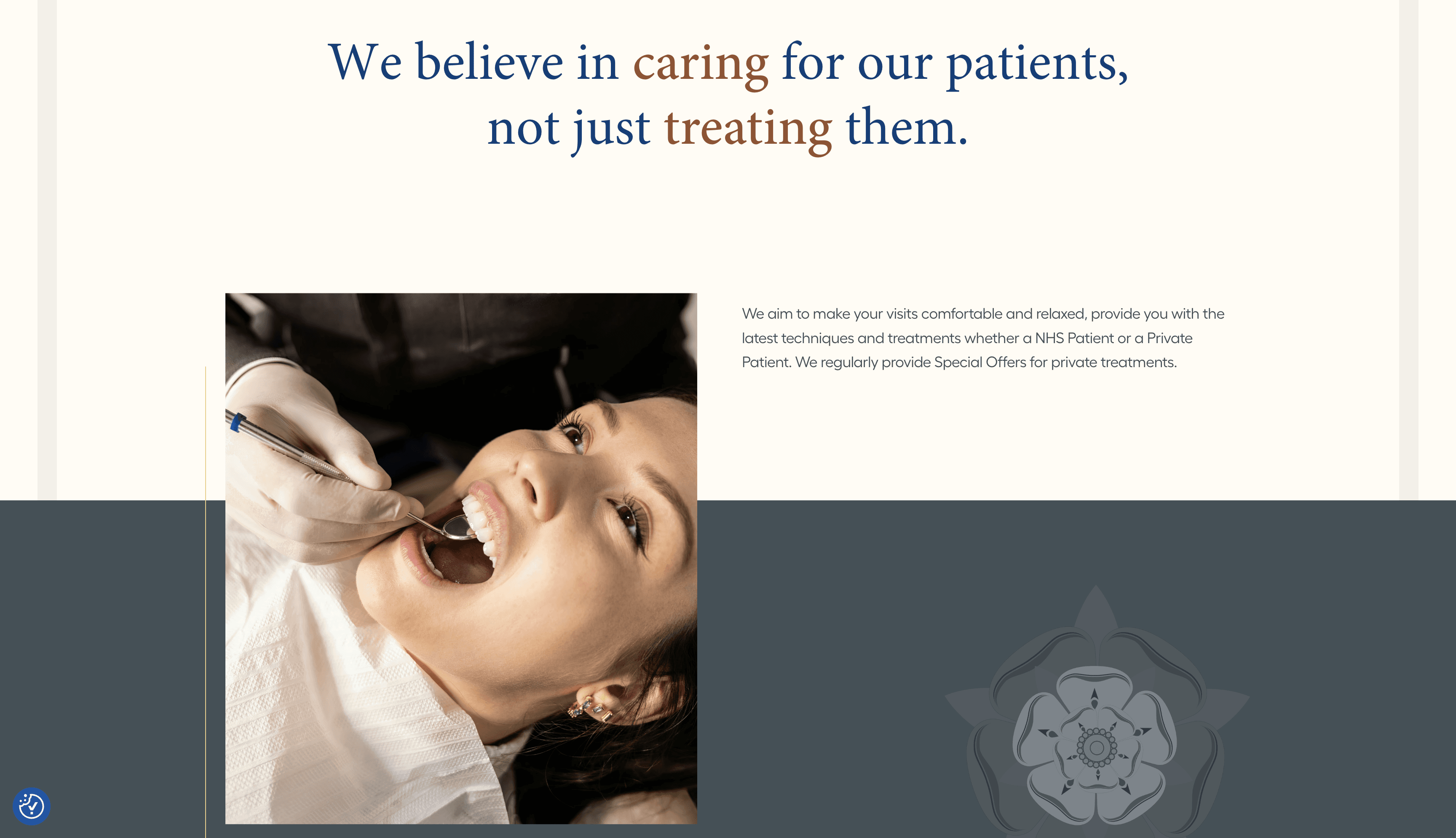
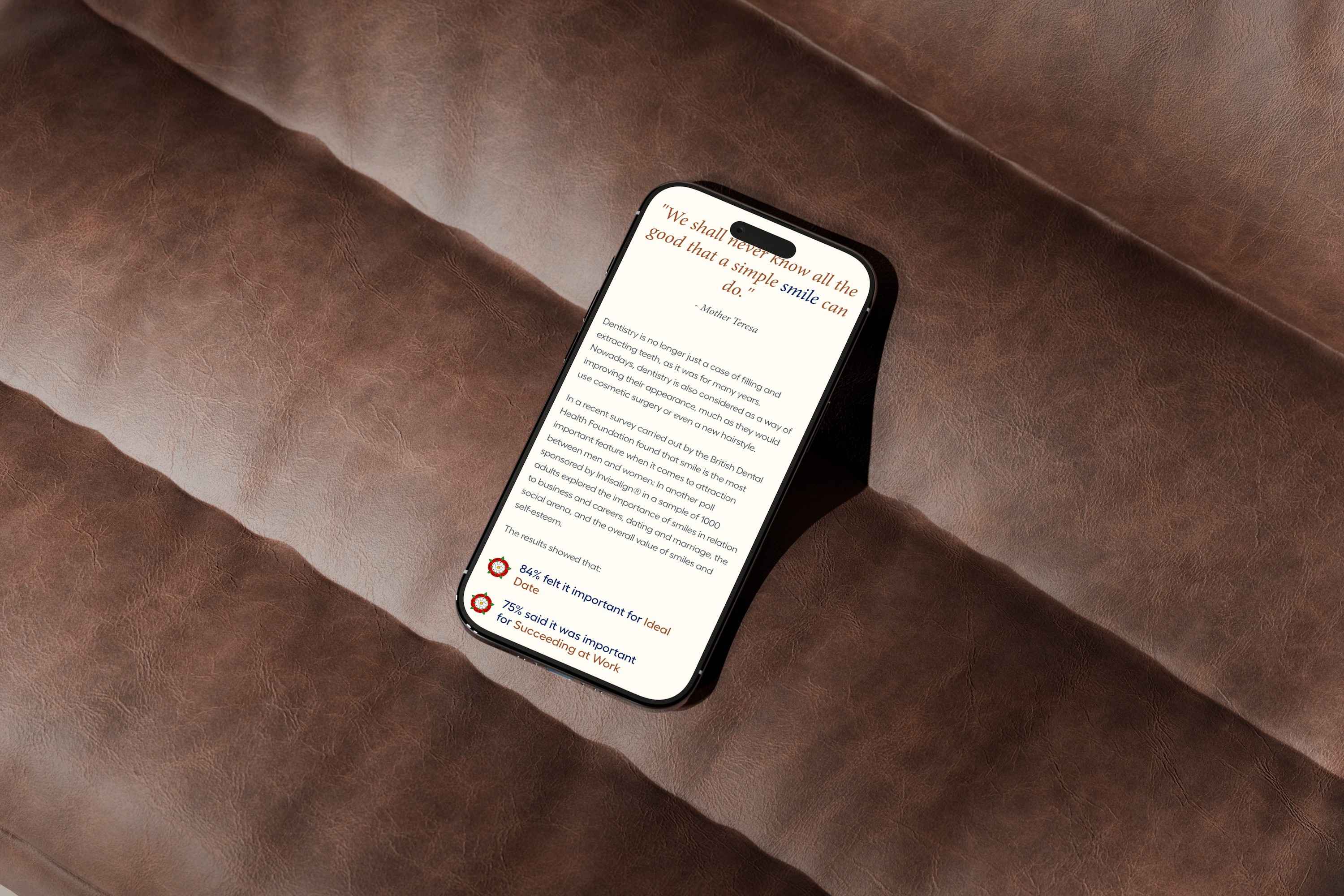
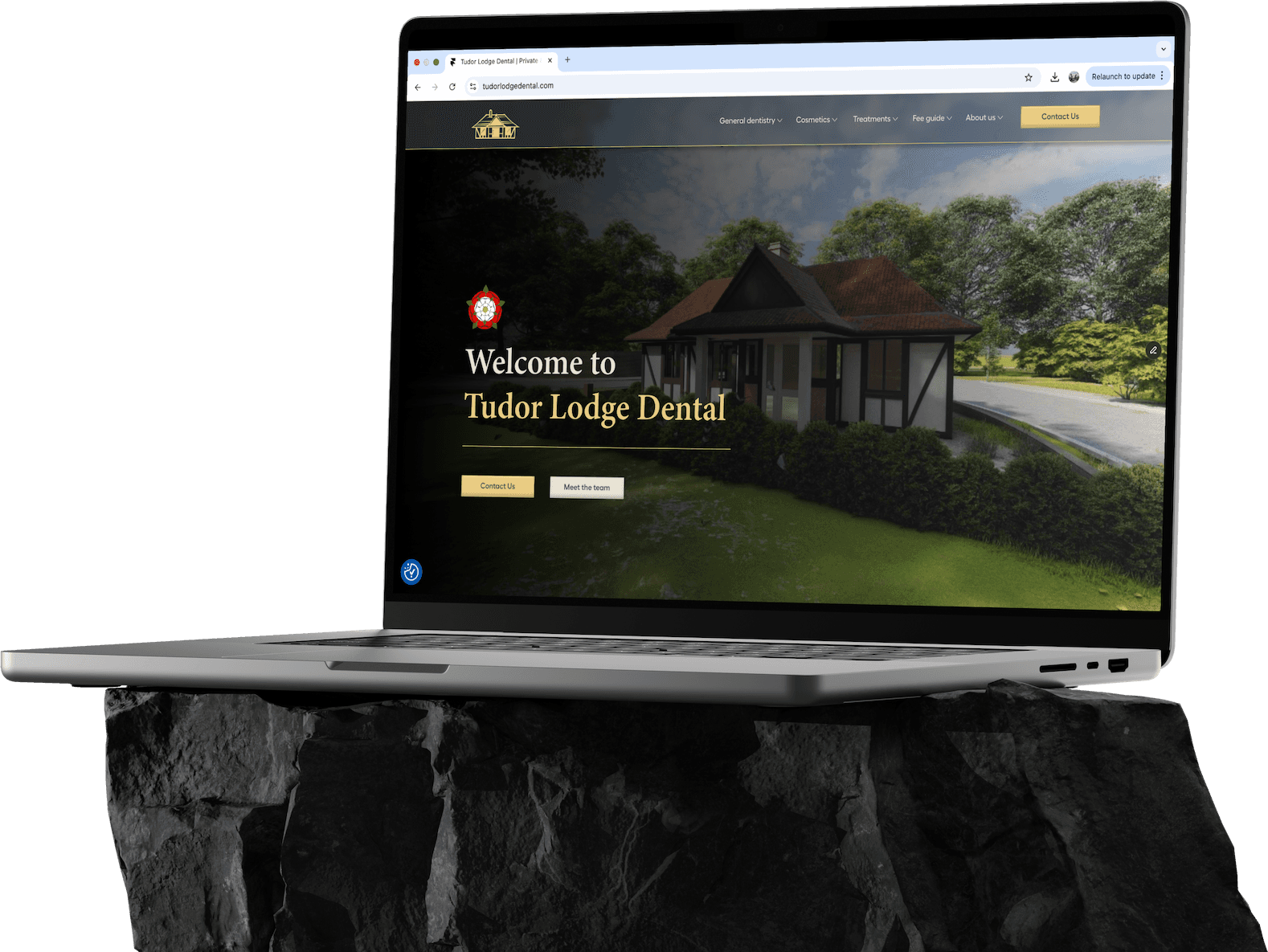
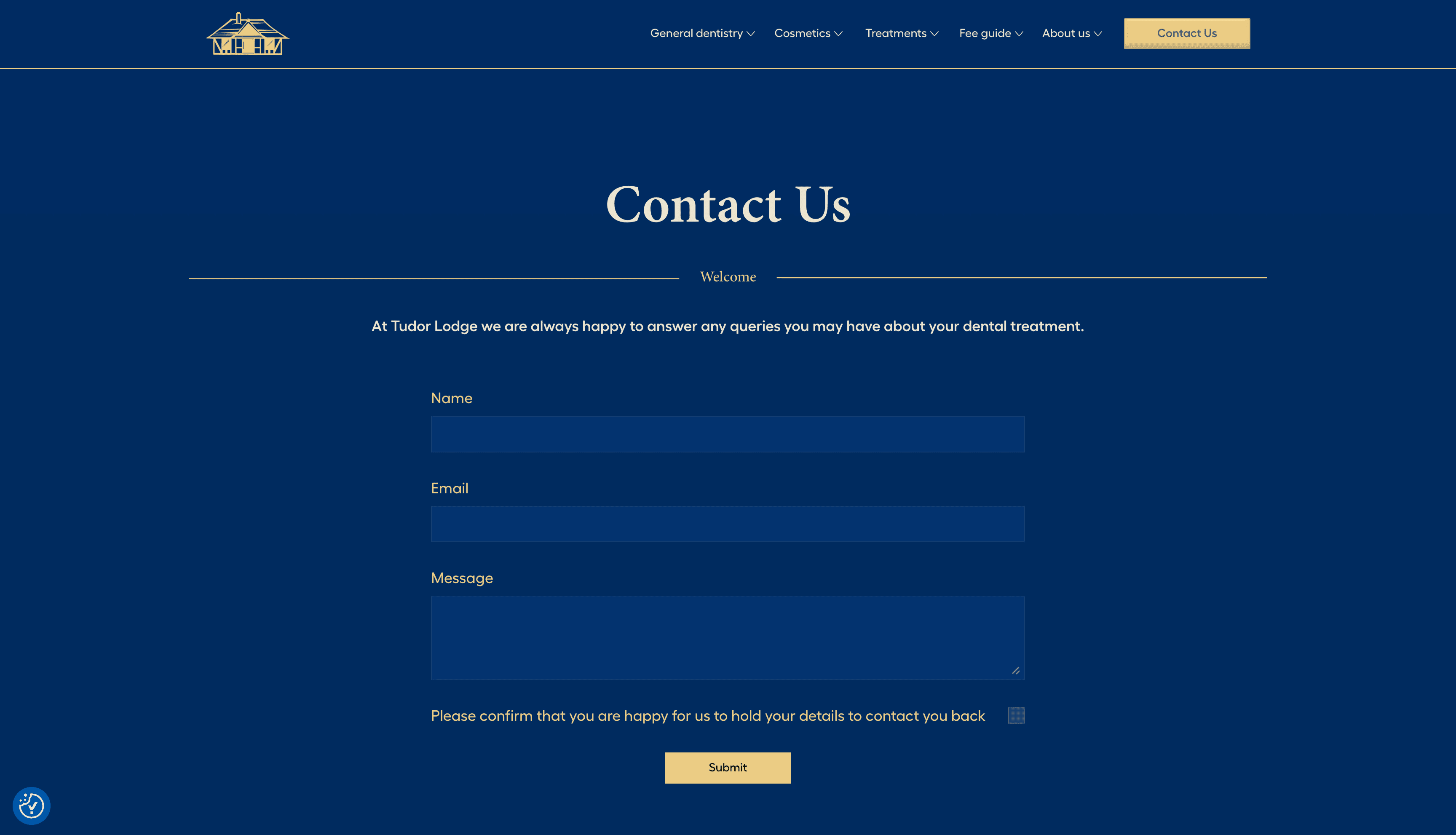
An end-to-end redesign for a long-established dental practice in Richmond, London. From brand identity and UX/UI design in Figma to development in Framer, the project focused on creating a more modern, accessible, and engaging experience.
An end-to-end redesign for a long-established dental practice in Richmond, London. From brand identity and UX/UI design in Figma to development in Framer, the project focused on creating a more modern, accessible, and engaging experience.
Timeline: 2 months
Category: Website design & development
Project type: Freelance project
Techstack/tools : Miro/ Figma / Framer / Illustrator
Year: 2024
Timeline: 2 months
Category: Website design & development
Project type: Freelance project
Techstack/tools : Miro/ Figma / Framer / Illustrator
Year: 2024
Timeline: 2 months
Category: Website design & development
Project type: Freelance project
Techstack/tools : Miro/ Figma / Framer / Illustrator
Year: 2024
01. THE CHALLENGES
68% of users left the website without viewing a treatment page, suggesting poor treatment discoverability.
Mobile users experienced a 42% higher drop-off rate than desktop users, indicating poor mobile optimisation.
Accessibility audits identified 30+ issues affecting readability, navigation, and overall usability.
Poor SEO visibility reducing patient acquisitions.
Outdated UI and lack of a brand identity.

02. THE APPROACH
Developed an improved information architecture to support clearer navigation.
Translated insights into wireframes to define structure and layout direction.
Developed a refreshed brand identity and designed a new logo.
Created high-fidelity designs and prototypes to validate solutions.
Created a style sheet defining typography, colour and spacing.
Developed responsive layouts and breakpoints to support mobile, tablet, and desktop.
Built the website in Framer, turning designs into a responsive, functional site.

03. THE OUTCOMES
Increased engagement with treatment pages by 38%, improving visibility of core dental services.
Reduced user drop-off before reaching treatment content, with 60% more users viewing service pages post-redesign.
Increased enquiries via contact channels by 31% following clearer CTAs and improved page structure.
Mobile usability improvements reduced drop-off rates by 54%.
SEO improvements increased organic visibility, resulting in a 45% uplift in indexed pages and local search impressions.





01. THE CHALLENGES
68% of users left the website without viewing a treatment page, suggesting poor treatment discoverability.
Mobile users experienced a 42% higher drop-off rate than desktop users, indicating poor mobile optimisation.
Accessibility audits identified 30+ issues affecting readability, navigation, and overall usability.
Poor SEO visibility reducing patient acquisitions.
Outdated UI and lack of a brand identity.
02. THE APPROACH
Developed an improved information architecture to support clearer navigation.
Translated insights into wireframes to define structure and layout direction.
Developed a refreshed brand identity and designed a new logo.
Created high-fidelity designs and prototypes to validate solutions.
Created a style sheet defining typography, colour and spacing.
Developed responsive layouts and breakpoints to support mobile, tablet, and desktop.
Built the website in Framer, turning designs into a responsive, functional site.
03. THE OUTCOMES
Increased engagement with treatment pages by 38%, improving visibility of core dental services.
Reduced user drop-off before reaching treatment content, with 60% more users viewing service pages post-redesign.
Increased enquiries via contact channels by 31% following clearer CTAs and improved page structure.
Mobile usability improvements reduced drop-off rates by 54%.
SEO improvements increased organic visibility, resulting in a 45% uplift in indexed pages and local search impressions.



01. THE CHALLENGES
02. THE PROCESS
03. THE OUTCOMES